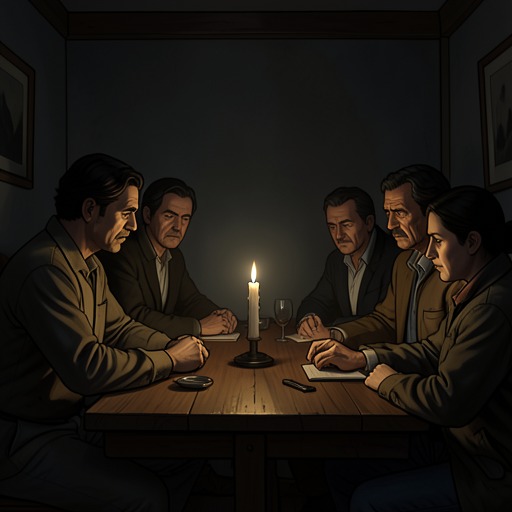
Paul Peace
Killers of the Flower MoonPaul Peace is remembered through the fragmentary record of his granddaughter Mary Jo Webb’s investigation: in December 1926, he suspected that his wife was poisoning him and sought legal help to divorce her and disinherit her; on February 23, 1927, he was struck in a hit-and-run and left to bleed on the road. His death remained unresolved, illustrating how a victim could disappear from official case files even as family members kept searching for answers.
Identity and surviving record
Webb, a retired teacher who spent decades investigating her grandfather’s suspicious death, had assembled boxes of guardian expense reports, probate records, and court testimony. When the book’s narrator visited her in Fairfax, she described Peace as one of the victims who did not appear in Federal Bureau of Investigation files and whose killers never went to prison. The records Webb preserved offer traces of his actions and fears, but they do not establish who was responsible for his death.
Fear of poisoning and attempt to change his will
In December 1926, Peace suspected that his wife, who was white, was poisoning him. He went to see Comstock, whom Webb regarded as one of the few decent white attorneys of the period, intending both to seek a divorce and to change his will so that his wife would inherit nothing. A witness later testified that Peace had said his wife was feeding him some kind of poison and killing him. The testimony preserves his fear as a reported statement, not proof that she poisoned him.
Asked how the poisoning might have been carried out, Webb recalled what her mother had said: two brothers who were doctors were known as a source of drugs used to poison Osage people. Webb identified them as the Shoun Brothers. Her account points toward a possible means and a local suspicion, but the evidence presented does not confirm that either brother supplied poison to Peace or caused his death.
Death and unresolved suspicion
Weeks after Peace vowed to divorce and disinherit the wife he suspected, he was injured in a hit-and-run on February 23, 1927, and left bleeding on the road. Webb believed that familiar forces had conspired to paper over what happened. The timing gives the death a troubling connection to Peace’s effort to protect his estate, but the book does not establish that the collision was deliberate or identify its perpetrator.
Webb’s investigation therefore ends not with a solved case but with an inherited uncertainty. Her boxes of documents kept Peace’s story available for scrutiny, while the absence of a conclusive finding left the central question unanswered. His place in the account is both personal and emblematic: he was a grandfather whose granddaughter continued to seek the truth, and a victim whose death, as Webb described it, brought neither a prison sentence for the killers nor a settled explanation for his family.